Overview
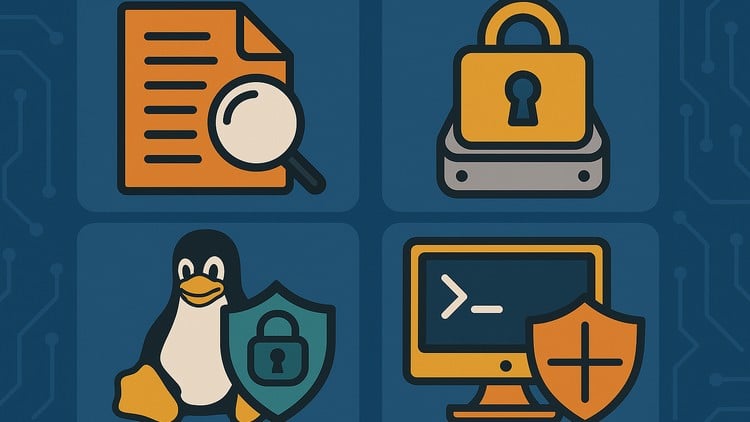
Securely manage Linux logs with syslog, rsyslog, and journald for effective system monitoring, Audit user passwords and file system access with advanced tools like John the Ripper and Auditd, Encrypt disks and files with LUKS and GPG to protect sensitive data and ensure secure data transmission, Harden services with SELinux, chroot jails, and LXC containers for enhanced system isolation and security
This course is designed for IT professionals, Linux system administrators, and cybersecurity enthusiasts who want to deepen their understanding of Linux security. It’s perfect for those with basic Linux command line experience who are eager to secure their systems and protect sensitive data. If you’re responsible for managing Linux servers or work in a security-focused role, you’ll find the practical, hands-on exercises and real-world examples especially valuable. Even if you’re new to Linux security, this course is structured to build your confidence and skills from the ground up. Let’s make your systems more secure together!
Learners will need access to a Linux system (physical, virtual, or cloud-based) to practice hands-on exercises. All tools—like syslog, rsyslog, journald, Auditd, John the Ripper, LUKS, GPG, fail2ban, SELinux, chroot, and LXC—are included in most Linux distributions.
This course equips you with essential knowledge and hands-on techniques to secure Linux systems, covering critical aspects of system logging, auditing, data security, and service hardening.
Starting with System Logging and Auditing Essentials, you'll learn how to set up secure Linux logging using syslog and rsyslog, manage system logs with journald, and ensure accountability through robust password management and auditing using John the Ripper. You’ll also explore Auditd for tracking file system access and analyze SUID and SGID permissions to identify potential vulnerabilities. Finally, you’ll learn how to secure your SSH service using fail2ban to protect against brute-force attacks.
Moving into Data Security, you’ll master disk encryption with LUKS, ensuring data protection at rest. You’ll also learn to encrypt individual files with GPG, and secure network traffic using SSH to prevent data breaches.
The Securing Services section empowers you with advanced techniques, including understanding and customizing SELinux to enforce security policies. You’ll explore the concept of chroot jails to contain applications and minimize risks. Finally, you’ll get introduced to LXC containers, setting up and managing lightweight Linux containers for isolating services and enhancing security.
By the end of this course, you’ll possess practical, actionable knowledge to fortify your Linux systems, making you a more proficient and security-conscious Linux administrator.
CloudsArk Academy
Cloudsark Academy is an account that produces courses in the IT field. Focusing on empowering learners, it offers practical knowledge across various technology domains. By creating IT content and courses, Cloudsark Academy aims to enhance the technical skills of its students, preparing them for successful careers in the IT industry.