Overview
Explain the core principles of Ayurvedic psychology and how it differs from body-type-based Ayurveda., Identify and describe the 16 Ayurvedic personality archetypes, along with their key traits and behaviors., Calculate and interpret your own personality type using structured self-assessment methods., Recognize different personality patterns in others to better understand their motivations and actions., Apply Ayurvedic psychology insights to make wiser decisions in relationships, work, and personal growth., Use practical strategies to balance and refine your personality for greater mental clarity and well-being.
People curious about their personality, Individuals seeking self-awareness, People looking for spiritual growth, Self-improvement enthusiasts, Mindfulness seekers, Decision-making improvers, People journaling for self-reflection, Minimalists exploring clarity, Solo travelers reflecting on identity, Retirees seeking purpose or new direction, High school students, College students, Psychology students (all branches), Sociology students, Philosophy students, Management students, Medical students, Law students, Arts students, PhD students in psychology, Comparative literature researchers, Mythology students, Cultural history learners, Human development researchers, Consciousness studies learners, Psychologists, Counselors, Psychotherapists, Social workers, Psychiatry students, Clinical psychology learners, Positive psychology enthusiasts, Emotional intelligence coaches, CBT practitioners, Trauma healers, Addiction recovery coaches, Mental health advocates, Support group facilitators, War veterans in recovery, People overcoming burnout, Ayurvedic doctors, Ayurveda students, Naturopaths, Herbal medicine practitioners, Wellness retreat facilitators, Spa therapists, Reiki practitioners, Energy healers, Sound healers, Yoga teachers, Meditation trainers, Holistic health coaches, Breathwork instructors, Integrative medicine professionals, Physiotherapists, Nutritionists, Sleep coaches, Stress management specialists, Cancer survivors exploring inner healing, Caregivers of patients, School teachers, College professors, Spiritual teachers, Leadership trainers, Corporate trainers, Soft skills trainers, Educational counselors, Life purpose coaches, Parenting coaches, Youth mentors, HR professionals, Recruiters, Corporate leaders, Entrepreneurs, Startup founders, Business consultants, Team managers, Organizational psychologists, Executive mentors, Career counselors, Workplace mediators, Performance coaches, Diversity & inclusion trainers, Workplace psychologists, Corporate wellness officers, Negotiators, Lawyers using personality insights, Judges interested in decision-making, Police officers, Military officers, Writers, Journalists, Actors, Filmmakers, Storytellers, Scriptwriters, Artists, Dancers, Musicians, Poets, Podcasters in self-help space, Documentary filmmakers, Radio hosts covering wellness, YouTubers in personal growth, Retreat organizers, Software developers, UX/UI designers, Data scientists, AI ethicists, Game developers, Digital nomads, Remote workers, Online community managers, Cyberpsychology researchers, Wellness app creators, Couples wanting better understanding, Parents studying children’s personalities, Marriage therapists, Pre-marital counselors, Teen counselors, Homemakers, Community leaders, Dating app users seeking deeper connection, Introverts curious about patterns, Extroverts balancing energy, People recovering from breakups/divorce, Elder care coaches, Family counselors, Child psychologists, Relationship coaches, Bhagavad Gita enthusiasts, Vedanta students, Upanishad learners, Comparative religion students, Monastics in training, Interfaith dialogue leaders, Mysticism researchers, Pastoral counselors, Seminary students, Spiritual podcasters, Astrology students, Tarot readers, Dream interpretation enthusiasts, Shamanic practitioners, Spiritual psychologists, Anthropologists, Cultural studies students, Intercultural communication trainers, Diplomats, International NGO workers, Travelers studying Ayurveda-based psychology, Peace-building facilitators, Language teachers, Global leadership students, Cross-cultural researchers, Chess players curious about psychology, Mindset-focused gamers, Martial arts students, Adventure sports enthusiasts, Gardeners reflecting on self-nature connections, Minimalists, Biohackers exploring ancient wisdom, Health influencers, Bloggers writing on wellness, Personal growth podcasters, Cultural historians, Archivists, Librarians curating psychology books, Journal editors, NGO education officers, Policy makers, Futurists, Gamification designers, MBTI coaches, Enneagram practitioners, Archetypal psychology enthusiasts, Stress relief workshop organizers, People in midlife transitions, People struggling with career choices, People exploring confidence-building, Success strategists, Motivational speakers, Self-help authors, Productivity coaches, Conscious parenting groups, Hospice volunteers, Trauma survivors, People in grief recovery, Burnout recovery seekers, Addiction survivors, NGO leaders, Policy researchers, Community health officers, Sound therapy facilitators, Martial arts coaches, Leadership development experts, Spiritual anthropologists, Archetype researchers, Human behavior bloggers, People building online communities, Anyone curious about the mind–personality connection in Ayurveda
Willingness and receptivity
Ayurvedic Psychology: Unlocking the 16 Secret Personality Archetypes of the Mind
The Forgotten Treasure of Ayurveda
What if I told you Ayurveda has a secret chapter,one so powerful, so hidden, that even most Ayurvedic doctors rarely touch it?
Not about doshas. Not about Prakriti.
This is about your inner psychology,the very architecture of your mind.
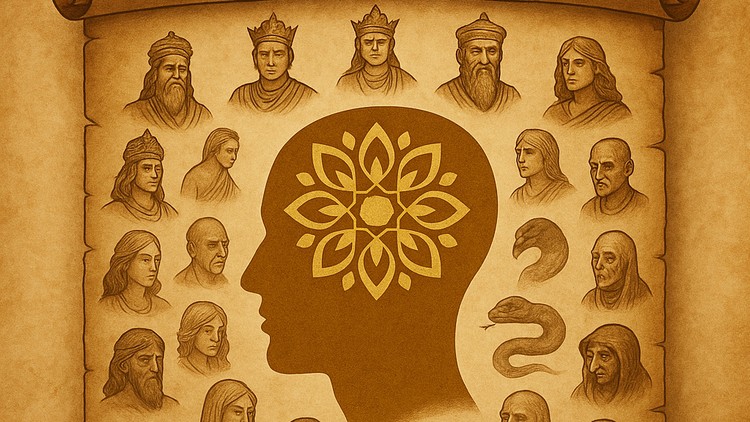
Over 5,000 years ago, the Charaka Samhita, along with Sushruta and Kashyap Samhita, described sixteen distinct archetypes of the human mind. Not body types. Not medical conditions. But the deep traits that shape how we think, feel, act, and even dream.
These 16 archetypes are a hidden treasure,buried in plain sight in the ancient texts. Forgotten by most. Misunderstood by many. But once you see them, you cannot unsee them.
And the best part? This course will not just speak in theory. Every archetype will be brought alive with real-world examples,famous leaders, artists, scientists, rebels, even celebrities you know today. You will laugh. You will recognize yourself. You will recognize your boss, your friend, your favorite actor. And you will finally understand,why people are the way they are.
Why Join This Course
Discover a 5,000-year-old system of psychology unknown to most modern thinkers.
Learn how to identify personality types in real life, from colleagues to world leaders.
Gain a new perspective on human behavior, relationships, and leadership.
Understand how to apply this wisdom in self-growth, counseling, coaching, and conflict resolution.
Experience an eye-opening, fun, and mysterious journey that changes how you see the world.
Why This Matters Now
Look around. The world is burning with conflict, confusion, endless division. Why? Because we don’t understand the psychology of difference. We try to make everyone the same. But Ayurveda whispers a secret: people are not meant to be the same. There can be sixteen different types and more with countless mixtures of these primary 16 types.
When leaders know this, they stop expecting a Vanaspatya to act like a Brahma. When teachers know this, they nurture the Gandharva differently from the Yamya. When you know this, your relationships, your career, even your sense of self,change forever.
This is why this knowledge, hidden for millennia, is a solution to modern chaos. It gives us perspective. It gives us compassion. It gives us clarity.
This isn’t just a course. It’s a revelation. A mirror that shows humanity’s deepest patterns, and a lamp that lights up paths for healing, growth, and understanding.
Why This Knowledge Feels Like Forbidden Treasure
Think about it,modern psychology speaks of personality tests, MBTI, and many more. But Ayurveda described sixteen mind-archetypes thousands of years ago. Hidden in Sanskrit verses. Waiting.
And here’s the thrilling part: this knowledge is not abstract philosophy. When you study these archetypes with real-world lenses, you see them everywhere:
The Brahma type in visionary leaders like Gandhi or Tesla.
The Indra type in political figures commanding nations.
The Gandharva type in musicians who mesmerize the world.
The Aasur type in Fierce self-worshiping extremist leaders.
The Sarp type in cruel criminals swinging between extreme anger and extreme paranoia.
The Vanaspatya type in those who live without spark,drifting, existing.
Once you know this framework, you begin to recognize people instantly. You know their drives, their flaws, their gifts. You begin to predict behavior. You begin to understand society itself.
A Course That Brings Ancient Wisdom to Life
This is not a dry recitation of Sanskrit shlokas. Nor is it shallow modern “typing.” This course is a living experience.
Every archetype explained with stories, celebrities, real-life examples.
Discussions on how each archetype shapes relationships, careers, leadership, creativity, and even spirituality.
Insights on how to identify your own mind-type,and work with it, not against it.
Lessons on how to recognize the archetypes in others,so you can navigate life more wisely.
Step in. Decode the hidden minds. See the world like the sages did.
Here is a breakdown of the most incredible personality types described in Ayurveda -
The Sattvic Archetypes: Light, Clarity, and Vision
The Sattvic personalities embody wisdom, purity, and higher order. They shine like guiding stars,each with a unique glow.
Brahma (The Creator Mind)
Expansive, nurturing, cosmic in outlook. The Brahma type builds worlds, systems, and visions. Think of founders who dream beyond themselves.Rishi (The Seer Mind)
Silent, contemplative, deeply intuitive. They live in truth, often detached, often feared, but always respected. A Rishi sees before others believe.Indra (The Kingly Mind)
Majestic, commanding, authoritative. Born to lead, yet tested by pride. The Indra type is the charismatic ruler everyone follows.Yamya (The Judge Mind)
Firm, unwavering, just. Like Yama himself, they embody discipline, rules, and law. Their strength? Boundaries. Their gift? Order.Varun (The Oceanic Mind)
Mysterious, vast, and deep. Like water, they flow, adapt, and cover hidden depths. A Varun mind sees the undercurrents others miss.Kuber (The Treasurer Mind)
Guardians of wealth, prosperity, and security. Kuber types manage resources with uncanny skill. They attract abundance,but must balance generosity with control.Gandharva (The Artist Mind)
Dreamy, musical, expressive. Masters of beauty and performance. A Gandharva mind turns life into art.
The Rajasic Archetypes: Fire, Desire, and Motion
The Rajasic personalities are driven, restless, ambitious. They change the world,but not always gently.
Asur (The Devil Mind)
Rebellious, ambitious, commanding. Asur types break systems, defy limits, and reshape society. Both feared and admired.Rakshas (The Traitor Mind)
Forceful, protective, sometimes destructive. Rakshas minds are warriors,loyal, aggressive, unstoppable.Paisach (The Ghoul Mind)
Haunted, restless, never satisfied. Always craving, always searching. Their hunger is their drive, and their curse.Preta (The Ghost Mind)
Obsessive, clinging, unable to let go. Preta minds live in attachments,of ideas, possessions, relationships.Sarp (The Serpentine Mind)
Sharp, strategic, hypnotic. Like the serpent, they move with precision and subtlety,masters of timing, secrecy, and power.Shakun (The Vulture Mind)
Mysterious, unpredictable, filled with signs and patterns. They live in coincidences, and others look to them for hidden meaning.
UPCOMING -
The Tamasic Archetypes: Darkness, Instinct, and Stillness
The Tamasic personalities are heavy, instinct-driven, stagnant. They remind us of the primal layers of being.
Pashav (The Animal-like Mind)
Driven by survival and desire. They act on instinct, rarely reflecting. Purely primal,yet undeniably human at the core.Matsya (The Fish-like Mind)
Fickle, scattered, unstable. Like a fish darting in water, they move without direction,easily influenced, easily lost.Vanaspatya (The Tree-like Mind)
Still, rooted, immobile. Living, yet passive. The Vanaspatya mind exists, endures, but rarely evolves.
Step Into the Mystery
By the end of this course, you will not only know the 16 archetypes,you will see them in action. Around you. Within you. Everywhere.
This is not just knowledge. It is the sight. The kind of sight that cannot be unseen.
Ayurveda hid this treasure in its deepest chambers. Now, for the first time, it is here,decoded, explained, made alive.
Welcome to a map to the human mind, written in fire, mystery, and timeless truth!
Dr. Kanikaa Verma
With over 13 years of experience in Ayurveda, I am Vaidya (Dr.) Kanikaa Verma.
I was allergic as a child to some common allopathic medications, which led me to study Ayurveda.
Early on in my career, I realized that lifestyle and dietary changes can be more effective than medications. As a consequence, a permanent cure is only possible through proper dietary and lifestyle practices. It is my goal to enable people to cure themselves by making simple changes to their lives.
Furthermore, I realized that almost all disorders are caused and cured by the mind. It was this experience that led me to study modern psychotherapy, specializing in the effects of mindfulness and meditation on the body.
The areas of expertise I have are Ritucharya consultation (a preventive seasonal therapy) and Satvavjaya (mental health management in the Ayurvedic tradition). My background also includes training as a psychotherapist and a Vedic astrologer.
Jivem Shardah Shatam
(Let us all live invincible for a hundred years.)